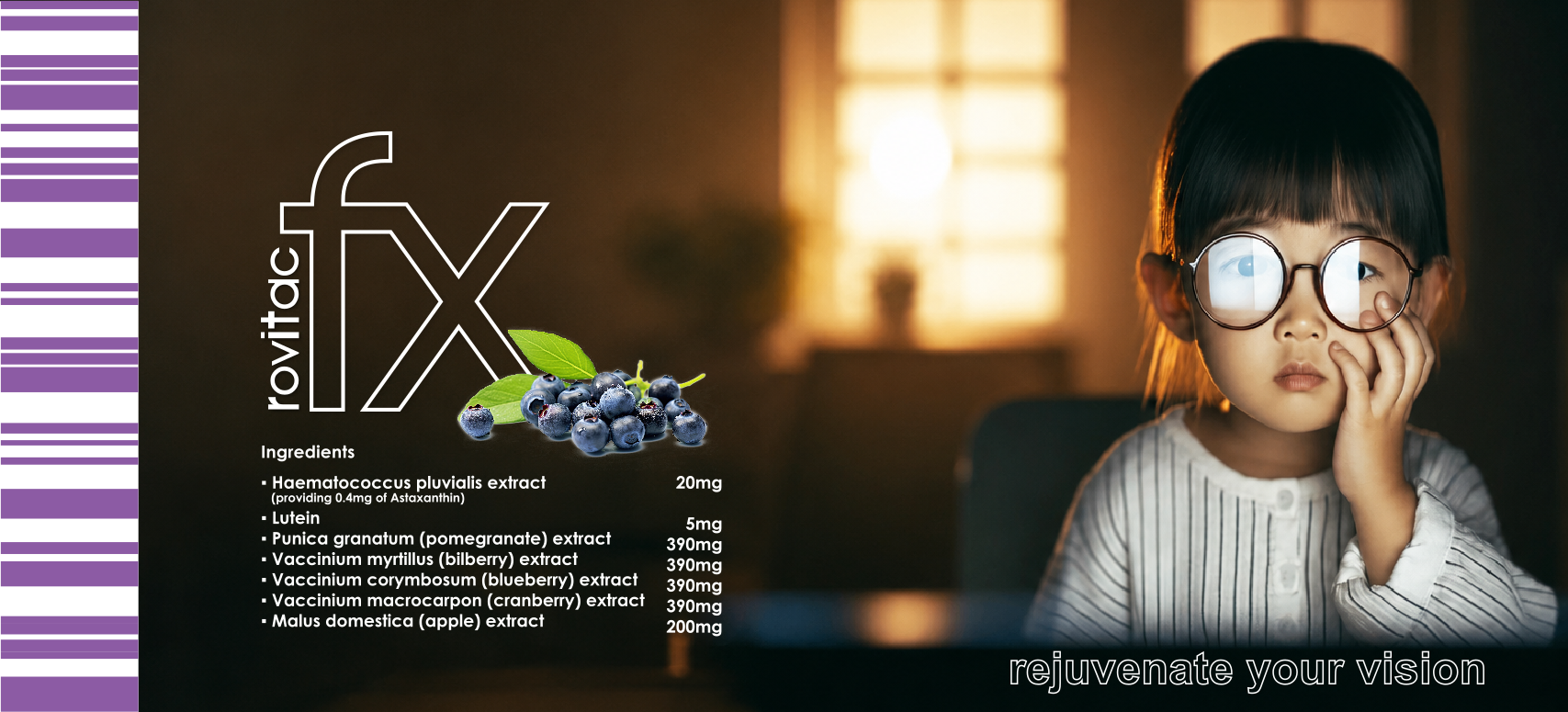
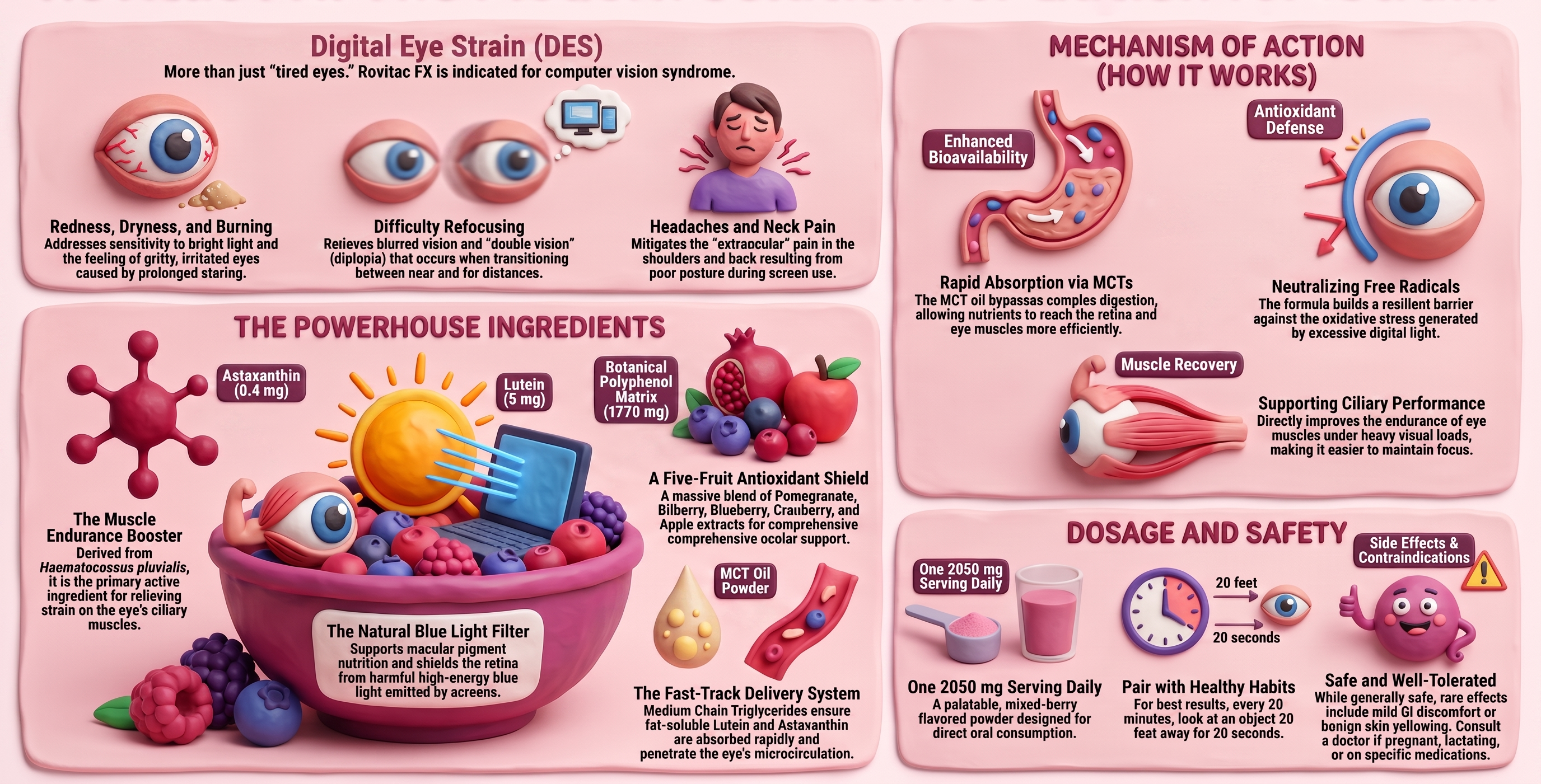
Rovitac FX is a palatable, mixed-berry flavored ocular nutraceutical powder designed for direct oral consumption to relieve and prevent Digital Eye Strain (DES) in both adults and children. It mitigates visual fatigue associated with prolonged screen time (computer vision syndrome) by addressing three core symptom categories:
- Ocular surface-related: Dry eyes, irritation or burning, eye strain, tired eyes, and sensitivity to bright light.
- Accommodation or vergence-related: Blurred near or distance vision after computer use, difficulty refocusing, and diplopia.
- Extraocular/Musculoskeletal: Neck, shoulder, and back pain, as well as headaches resulting from screen-related postural discomfort.
- Paediatric Note: Myopia progression in children has also been linked to digital eye strain, making early intervention critical.
Ingredients (per 2050 mg dose)
- Astaxanthin (0.4 mg from 20 mg Haematococcus pluvialis extract): The primary active ingredient for supporting eye muscle endurance and relieving accommodative strain from prolonged screen exposure.
- Lutein (5 mg): Acts as a natural filter for harmful blue light emitted by screens and supports macular pigment nutrition.
- Botanical Polyphenol Matrix (1770 mg total): Comprises extracts of Punica granatum (Pomegranate) (390 mg), Vaccinium myrtillus (Bilberry) (390 mg), Vaccinium corymbosum (Blueberry) (390 mg), Vaccinium macrocarpon (Cranberry) (390 mg), and Malus domestica (Apple) (200 mg).
- MCT Oil Powder: Medium Chain Triglycerides are integrated to serve as an enhanced nutrient delivery system.
Mechanism of Action:
-
Enhanced Bioavailability: Since astaxanthin and lutein are fat-soluble, the built-in MCT oil powder dramatically improves their absorption due to its easy digestibility and rapid liver metabolism. This ensures essential nutrients penetrate deeply into the eye's microcirculation and optimally reach the retina.
-
Antioxidant Defense & Macular Support: Neutralizes free radicals generated by excessive blue light exposure and enhances macular resilience via targeted lutein and broad polyphenol delivery.
-
Visual-Fatigue Relief: Directly supports accommodative performance and ciliary muscle endurance under screen-related visual loads.
Relevance:
Evidence strongly supports astaxanthin for digital eye strain, including a randomized trial demonstrating significant improvements in acute and chronic digital eye strain specifically in children. Combinations of bilberry, astaxanthin, and lutein have also been shown in human studies to improve eye focus and alleviate subjective symptoms of asthenopia after screen exposure.
For optimal clinical results, daily supplementation should be paired with the "20-20-20 Rule"—taking a break to look at an object 20 feet away for at least 20 seconds every 20 minutes.
Contraindications:
Rovitac FX is generally well-tolerated. Potential benign adverse effects include mild gastrointestinal discomfort, changes in stool color, and rare hypersensitivity. High carotenoid intake may occasionally lead to benign skin yellowing, and botanical extracts may cause intolerance in sensitive users. Use caution in individuals with known hypersensitivities to any ingredient, pregnant or lactating women, and patients on medications where carotenoid or botanical interactions may occur.
References
- Hecht KA, Marwah M, Wood V, et al. Astaxanthin (AstaReal®) Improved Acute and Chronic Digital Eye Strain in Children: A Randomized Double-Blind Placebo-Controlled Trial. Adv Ther. 2025. PMID: 40014233.
- Kizawa Y, Sekikawa T, Kageyama M, et al. Effects of anthocyanin, astaxanthin and lutein on eye functions: a randomized, double-blind, placebo-controlled study. J Clin Biochem Nutr. 2021.
- Can Nutrition Play a Role in Ameliorating Digital Eye Strain? Review article.
- Effects of dietary supplementation with a combination of fish oil, bilberry extract, and lutein on subjective symptoms of asthenopia in humans. PubMed PMID: 22199129.
- Review literature on lutein, carotenoids, and eye health.
- National Center for Biotechnology Information (NCBI) Reference for Digital Eye Strain:
https://www.ncbi.nlm.nih.gov/pmc/articles/PMC8434525/.
- PubMed Reference for Lutein: https://pubmed.ncbi.nlm.nih.gov/17646583/.
- Product labels and brochures from the images provided.