
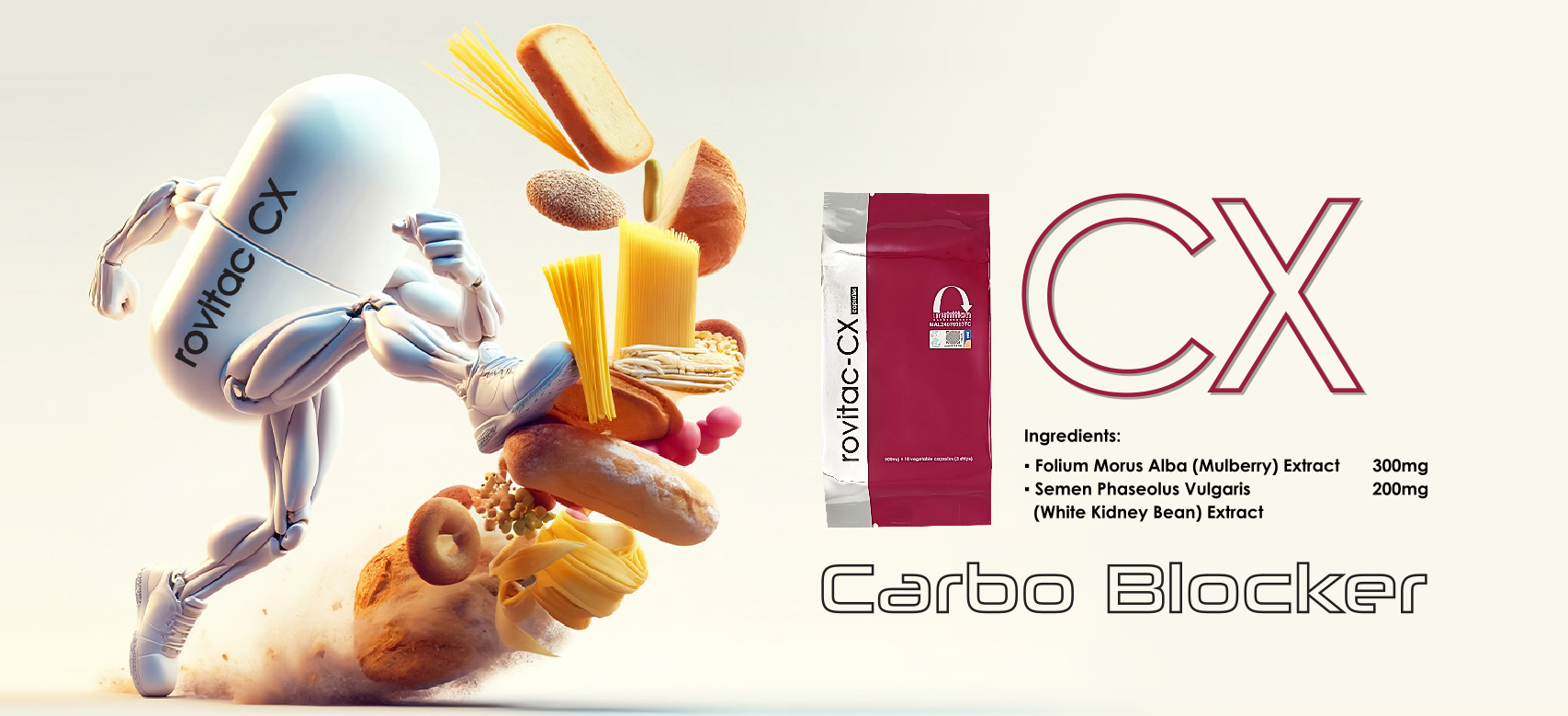

Rovitac-CX Banner
Rovitac-CX Overview
CX kick the carbs video

Rovitac-CX Physician Reference

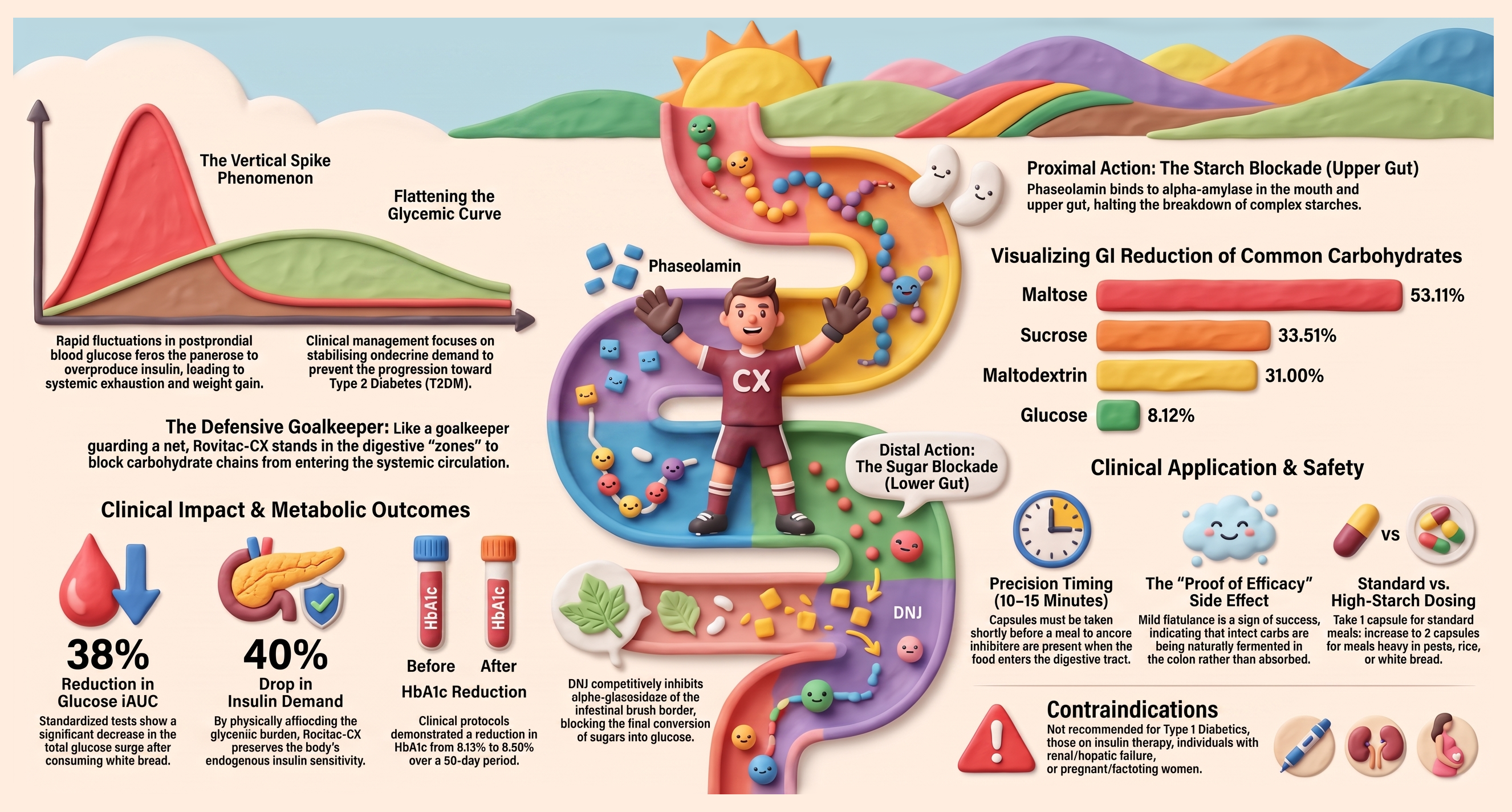
In modern medicine, the response to refined carbohydrate consumption is defined by the "vertical spike" phenomenon. These rapid fluctuations in postprandial blood glucose force an acute endocrine response, requiring the pancreas to co-secrete excessive insulin and C-peptide to manage the glycemic load. Over time, this repetitive metabolic stress drives insulin resistance, weight gain, and the progression toward Type 2 Diabetes Mellitus (T2DM). Focus is on "flattening the glucose curve" to stabilize endocrine demand and prevent exhaustion. Rovitac-CX addresses this need through a strategy that intervenes in the breakdown of dietary carbohydrates before they enter systemic circulation.

2. Dual-Component Formulation & Pharmacological Targets

Rovitac-CX utilizes a dual-intervention model, combining two standardized botanical extracts to inhibit the specific enzymes responsible for the sequential stages of carbohydrate digestion. Targeting both alpha-amylase and alpha-glucosidase provides a comprehensive blockade superior to single-enzyme inhibition.

Component Botanical Source Biochemical Target Pharmacological Role
Phaseolamin Semen Phaseolus vulgaris (White Kidney Bean) Alpha-Amylase Natural isoform-1 inhibitor; binds to alpha-amylase to prevent the initial cleavage of complex starches into absorbable disaccharides.
DNJ (1-deoxynojirimycin) Folium Morus alba (White Mulberry) Alpha-Glucosidase Alkaloid azosugar; provides competitive inhibition of the brush border enzymes, blocking the hydrolysis of disaccharides into glucose.

By addressing the digestive process at both the proximal and distal stages, this blockade ensures that dietary carbohydrates remain in their complex, unabsorbable forms as they transition through the small intestine.

3. Mechanism of Action (MOA): The Synchronized Blockade Model

The efficacy of Rovitac-CX is rooted in its "dual intervention model," which synchronizes with human digestive physiology across two distinct zones to prevent the rapid influx of monosaccharides.

  1. Proximal Action (Starch Blockade): Upon ingestion, Phaseolamin initiates the blockade by binding to alpha-amylase in the mouth and small intestine. This halts the enzymatic conversion of dietary starches into simpler chains, effectively reducing the substrate available for further digestion.
  2. Distal Action (Sugar Blockade): Simultaneously, the alkaloid DNJ targets the hydrolysis of disaccharides at the brush border. By acting as a competitive inhibitor of alpha-glucosidase, it prevents the final breakdown of complex sugars (such as maltose and sucrose) into glucose molecules.

Impact: This synchronized enzymatic interruption ensures that carbohydrate chains remain intact and unabsorbed. Consequently, these starches pass through the small intestine without triggering a rapid glucose surge, offloading the glycemic burden from the pancreas and preserving endogenous insulin sensitivity.

4. Metabolic Outcomes

Potential acute postprandial responses and long-term glycemic control.

  • Acute Postprandial Response: In a standardized white bread load test, subjects demonstrated a 38% reduction in glucose iAUC (incremental area under the curve).
  • Pancreatic Preservation: Evidence shows a 40% drop in insulin and C-peptide demand. Suppression of C-peptide—which is co-secreted with endogenous insulin—serves as the primary biochemical evidence of efficacy, proving the formulation physically offloads the insulin burden.
  • Long-Term Glycemic Control: Administration of 500mg Morus alba extract twice daily (BID), as established in the Sohail et al. (2020) protocol, resulted in a significant HbA1c reduction from 9.13% to 8.59% over 90 days.
  • Glycemic Index (GI) Modification: Mulberry leaf extract (MLE) significantly lowers the GI of various carbohydrates:
    • Maltose: 53.11% reduction
    • Sucrose: 33.51% reduction
    • Maltodextrin: 31.00% reduction
    • Glucose: 8.12% reduction (indicating mild inhibitory effects on direct glucose absorption)
  • Secondary Metabolic and Pathological Markers:
    • Vascular & Hepatic Protection: Research indicates a reduction in the development of aortic fatty streaks in the muscular layers and a significant decrease in hepatic steatosis and lipid peroxidation.
    • Satiety: Stabilization of glucose fluctuations promotes extended satiety, supporting weight management in metabolic syndrome profiles.

5. Dosage, Timing, and Administration

Precise administration is a requirement of the mechanism to ensure the inhibitors are present in the digestive tract simultaneously with the substrate.

  • Standard Dosage: 1 capsule before each meal.
  • High-Carbohydrate/Starch Load Dosage: Exactly 2 capsules prior to meals heavy in refined starches (e.g., pasta, white bread, or rice).
  • Critical Timing: Administration must occur 10–15 minutes before the meal. This synchronization is vital for the inhibitors to bind with enzymes effectively as food enters the digestive zones.

6. Safety Profile

Rovitac-CX demonstrates a superior tolerability profile compared to synthetic inhibitors like acarbose, which are frequently discontinued due to severe gastrointestinal distress.

Side Effects: Physicians should counsel patients that mild gastrointestinal flatulence is not a failure of the product, but rather tangible biochemical proof of efficacy. This occurs when intact carbohydrate chains successfully bypass absorption in the small intestine and undergo natural fermentation by the microbiome in the colon.

Contraindications Adhering to study exclusion protocols, Rovitac-CX is not recommended for:

  • Patients with Type 1 Diabetes. Patients currently receiving insulin therapy (due to potential hypoglycemic synergy).
  • Individuals with chronic organ disorders (renal or hepatic failure).
  • Pregnant or lactating women.

Rovitac-CX provides a practical, evidence-based tool for buffering the systemic impact of the modern food environment, offering physicians a viable strategy for stabilizing glucose fluctuations and reducing chronic metabolic demand.

References:

  1. Liu et al. (2020): Effects of mulberry leaf and white kidney bean extract mix on postprandial glycaemic control in pre-diabetic subjects: a randomized controlled trial.(Journal of Functional Foods, Vol 73, 104117). doi:10.1016/j.jff.2020.104117.
  2. Zoha Sohail et al. (2020): Effect of Morus alba (white mulberry) leaf on HbA1c of patients with type II diabetes mellitus. (Mal J Nutr 26(1): 077-084). doi:10.31246/mjn-2019-0055.
  3. Wang et al. (2018): Mulberry leaf extract reduces the glycemic indexes of four common dietary carbohydrates. (Medicine, 97:34, e11996). doi:10.1097/MD.0000000000011996.
  4. Micheli et al. (2019): Phaseolus vulgaris L. Extract: Alpha-Amylase Inhibition against Metabolic Syndrome in Mice. (Nutrients, 11, 1778). doi:10.3390/nu11081778.
↻

Please Rotate Your Device

Please rotate your phone to landscape mode to view this website.